The Essential Guide to Breathing & Your Heart
Not a metronome
A healthy heart speeds up a little every time you breathe in and eases off every time you breathe out. Here is what that rhythm says about you, what slow breathing can and cannot do for your heart, and where the honest line sits.
alveos Research · Reviewed for accuracy: Dr Boon Lim, consultant cardiologist and electrophysiologist, Imperial College Healthcare · Featuring Dr Boon Lim
35 min read
Your heart should never beat like a metronome
Dr Boon Lim sees patients in a clinic at Imperial College Healthcare in London, and one of the first things he often does with them costs nothing and needs no equipment. He asks them to find their own pulse.
Try it now. Turn one hand palm up, follow your thumb down to the wrist crease, go one finger's width below it and rest two fingers there. (If the wrist is hard to find, slide two fingers about two centimetres to the side of your Adam's apple instead.) Once you can feel the beat, breathe in slowly over about six seconds and pause at the top. Notice the rhythm. Then breathe out slowly over six seconds and pause at the bottom. Notice it again. Do three or four rounds.
If you felt your pulse quicken slightly near the top of the breath in, and settle a little during the breath out, you have just felt one of the most studied rhythms in human physiology. It has a clumsy name, respiratory sinus arrhythmia, and it is not a disorder. It is a sign that the connection between your breathing and your heart is working.
"When your heart beats like a metronome, you're on death's door, because your heart should never beat like a metronome."
Dr Boon Lim, alveos Art & Science of Breathing, E17
That is a cardiologist's deliberately blunt way of putting it, but the point underneath is sound. A heart that ticks along at a perfectly fixed interval has lost the flexibility that marks a well-regulated system. In Dr Lim's words, the heart's variability "with breathing, with circadian rhythm, which is the day-night diurnal variation, and obviously with stress, is what marks a healthy autonomic nervous system."
Most people carry the opposite picture. We think of the heart as a pump that should be steady, and of any irregularity as a warning. So when a smartwatch graph shows the heart rate rising and falling while we lie perfectly still, or an ECG report uses the word "arrhythmia", it can be alarming. In this particular case, it usually means the reverse of what people fear.
This guide follows that rhythm outward. It covers why your heart rate moves with your breath, what heart-rate variability (HRV) actually measures and why it confuses so many people, why slowing your breathing to around six breaths a minute makes the swing grow, and what the research does and does not show about breathing, blood pressure and heart health. It also marks clearly where breathing questions stop being wellness questions and become ones for your doctor. There are several of those, and we will not blur them.
What breathing does to your heart, and what it doesn't
The internet version of this topic runs on two big overclaims. The first is that breathing "controls" your heart, so the right technique will switch on calm, fix your HRV and protect you from heart disease. The second is that the nervous system is a simple two-pedal machine: an accelerator (the sympathetic branch) and a brake (the parasympathetic branch, carried largely by the vagus nerve), with your exhale pressing the brake.
Both contain a grain of truth, which is why they spread. Both fall apart when you press on them.
Start with control. Breathing does not set the level of your heart rate the way a thermostat sets a room. The physiologist Dwain Eckberg, whose work on this rhythm is among the most cited, described breathing as a gate: it changes the timing of the nervous signals reaching the heart across each breath, without, in his experiments, changing their overall level. [2] Your heart rate moves with every breath because the gate opens and closes. Your average heart rate is set by much more than breathing: fitness, posture, temperature, caffeine, illness, hydration, hormones, what you are thinking about.
Now the pedals. Dr Lim uses the accelerator-and-brake image with patients because it is a fast way in, and then he refines it straight away. He prefers the yin-yang symbol: two interlocking halves that are meant to sit roughly in balance, where "high vagal tone" means the balance has shifted a little toward the calmer side, "say 60% white and 40% black," and chronic stress shifts it the other way. The picture is a shifting balance, not an on-off switch. The research goes further still. The two branches are not simple opposites and can be strongly active at the same time: when someone is plunged into cold water, the cold-shock response pushes the heart rate up while the diving response pulls it down, and physiologists believe this "autonomic conflict" helps explain some arrhythmias during immersion. [19]
Fair to say. Breathing is one of the few ways you can voluntarily influence systems that mostly run on autopilot. Each breath shapes the rhythm of your heart, and slow breathing reliably makes that rhythm swing more while you are doing it. It is a real, free, accessible lever.
Not fair to say. That breathing controls your heart, switches your nervous system from "fight" to "rest", or protects you from heart disease. The strongest effects are in the moment; the long-term effects on blood pressure and heart health are modest, mixed, or not yet shown.
One more honest note before the mechanisms, because it changes how to read everything else. Much of the evidence linking HRV to heart health is association, not proof of cause. People with low HRV do tend to fare worse. That does not mean that pushing your HRV up with a breathing exercise will change your outcome, and no trial has shown that it does. Keep that distinction in your pocket. It will come up again.
Why every breath in nudges your heart rate up
What you felt under your fingers is the sum of several coupled mechanisms acting together, and physiologists still argue about how much each one contributes. [1] [2] Here they are in plain language.
A gate in the brainstem. The networks that generate your breathing sit right next to the ones that send vagal signals to the heart, and they are wired together. During a breath in, vagal signals to the heart's pacemaker are partly held back, so the heart speeds up a little. During a breath out, they flow freely again, so it slows. This central coupling is the part Eckberg emphasised. [2]
A pressure reflex. Breathing in lowers the pressure inside your chest, which changes how blood returns to the heart and nudges blood pressure up and down across each breath. Pressure sensors in your major arteries notice those small swings and adjust the heart rate within a beat or two to compensate. This is the baroreflex, and it will matter a lot when we get to slow breathing. Dr Lim describes it as shifting "the flow of blood back into the heart to activate the so-called baroreflex... to then exert an immediate effect within two seconds."
Stretch sensors in the lungs. As the lungs inflate, stretch receptors send signals back to the brainstem that feed into the same loop.
Figure 1 · Respiratory sinus arrhythmia: the heart follows the breath
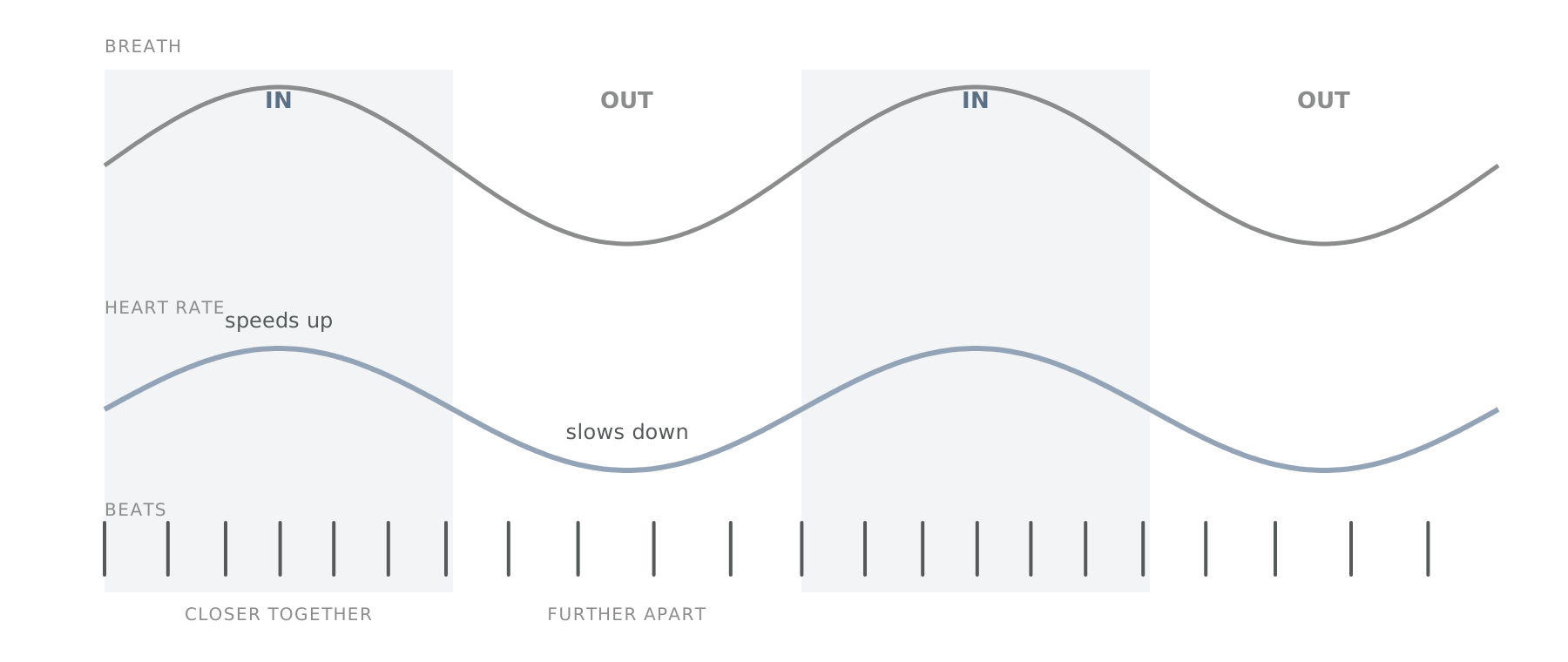
Heartbeats bunch up on the breath in and spread out on the breath out. The swing is small at a normal breathing pace and larger when breathing is slow and deep. This is illustrative; real traces are noisier, and the size of the swing varies a lot between people.
Three things about this rhythm are worth knowing, because they explain most of what follows.
First, its size depends on how you breathe. Slow, deeper breaths produce a bigger swing in heart rate than quick, shallow ones. That was shown in classic human experiments in the early 1980s and has been confirmed many times since. [1]
Second, it fades with age and changes with state. Young, fit people tend to show a large swing. It shrinks as we get older. In a study of 189 healthy people aged 20 to 90, the synchronisation between breathing and heartbeat was around 40% lower in the oldest group, and, strikingly, it rose about fourfold when people moved from wakefulness into light and deep sleep. Sleep stage made a bigger difference than healthy ageing. [3] Dr Lim sees the flattened version in clinic: some older patients, often with poorly controlled diabetes, breathe in as deeply as they can and their heart rate goes from 60 to 62, then drops to 58 as they breathe out. A fit younger person might swing several times further.
Third, why it exists is still an open question. One long-standing idea, from experiments in anaesthetised dogs, is that timing heartbeats to the breath makes gas exchange in the lungs more efficient. A later modelling study disagreed and proposed instead that it lets the heart do less work while keeping carbon dioxide levels normal. [4] It is refreshing to know that something you can feel with two fingers is still being argued about by physiologists.
When it matters clinically. Because this rhythm depends on healthy nerve signalling, clinicians use a formal deep-breathing test (paced at six breaths a minute, under controlled conditions, alongside other tests) to look for damage to the nerves that regulate the heart, for example in long-standing diabetes. [5] That is a clinical test with specific equipment and protocols. A wearable reading, or the pulse check above, is not a substitute for it and cannot tell you whether you have autonomic neuropathy.
HRV is a calculation. The rhythm is what it is catching
Heart-rate variability has become one of the most-watched numbers in consumer health, and one of the most misunderstood. Patrick, alveos' co-founder, asked Dr Lim the question most people never get to ask a cardiologist: what is the difference between the HRV your ring or watch reports and the breathing rhythm we have just described?
His answer was that one is a measurement and the other is the thing being measured. A watch or ring shines light into the skin, picks up the pulse, and records the time between each pair of beats. Dr Lim sketched it as a spreadsheet: "pulse one could be 1000 milliseconds... pulse two... could be 1.1 seconds, pulse 3 could be 1.3 seconds... pulse five could be 0.9, and pulse 6 could be 0.8 seconds." Plot those intervals in a line and, at rest, you see a gentle wave rising and falling. HRV is a number calculated from how much that wave moves over a set period. Breathing is one of the biggest things making it move.
That has an awkward consequence that most HRV content skips. Your breathing rate changes your HRV number, independently of anything else. The standard frequency bands used in HRV analysis were defined in 1996: "high frequency" (0.15 to 0.40 Hz) corresponds to breathing at roughly 9 to 24 breaths a minute. [6] Breathe slower than about nine a minute and the breathing-driven part of the signal slides into the "low frequency" band. The high-frequency number can then fall even while vagal influence on the heart is rising. Psychophysiologists have argued for years that HRV should not be interpreted without knowing how the person was breathing at the time. [7]
For the same reason, researchers caution against treating HRV as a direct measure of "vagal tone". Breathing rate and depth both change it, so it is at best an index of vagal influence, and a cleaner one when breathing is controlled or known. [8]
"It's very important to get the nuanced understanding that we need to always compare apples with apples."
Dr Boon Lim, alveos Art & Science of Breathing, E17
In practice, Dr Lim's rule of thumb is to compare like with like. HRV during deep sleep should be compared with HRV during deep sleep, not with a reading taken after a rushed meeting. "If you've just had coffee, you've got a full bladder, if you've just rushed from a kind of meeting and you want to sit down and calibrate... it's gonna be all over the place." That is why most wearables lean on overnight readings, when conditions are steadier.
And his answer to the most common mistake was immediate: comparing yourself with other people. "The HRV score for an 18-year-old is bound to be vastly different from a 50-year-old HRV. And HRV for a long distance runner at 50 is going to be very different from an office worker who hits the gym for weight training at 50. So these metrics are kind of useful for serial assessments in the same individual."
Fair to say. HRV is a useful personal trend when measured the same way at the same time, ideally overnight. Lower HRV in large populations is associated with a higher risk of heart problems. [9]
Not fair to say. That your HRV score measures your heart's health against anyone else's, or that raising it will lower your risk. The population links are associations, and your breathing rate alone can move the number.
What "vagal tone" means, and why it isn't a dial you turn
The vagus nerve has become a wellness celebrity, usually as something to "hack". The reality is more interesting. There are two vagus nerves, one on each side of the neck, running from the brainstem down into the chest and abdomen. The name comes from the Latin for wanderer, because they reach so many organs, including the heart, lungs and gut.
One detail changes how you should think about it. Most of the vagus nerve's fibres, roughly 80% by the usual count and "80 to 85%" in Dr Lim's estimate, are sensory. They carry information from the organs up to the brain, not instructions down. The vagus is at least as much a reporting line as a control line, which is part of why slow breathing, which changes the signals coming up from the heart and lungs, can shift how the whole system settles.
When clinicians say someone has "high vagal tone", they usually mean the calming influence on the heart is strong at baseline. The clearest sign is a low resting heart rate. Dr Lim has seen an endurance athlete with a resting heart rate of 32 beats per minute, which he describes as "perfectly fine for this person in light of their fitness." In a non-athlete, a heart rate that low can mean something else entirely, which is why context always matters.
Two corrections to the popular story are worth holding onto.
More vagal is not always better. In some people, particularly some endurance athletes, atrial fibrillation episodes tend to start at night or after meals, when vagal influence is high. Cardiologists have described this "vagal" pattern of AF for decades. [20] Fainting, which we will come to, is another case of the vagal response overshooting. Balance and flexibility matter more than maximising one side.
It is a shifting pattern. Dr Lim's yin-yang picture fits here. In his patients with autonomic dysfunction, the balance has usually shifted toward the activated side, with a higher heart rate, faster breathing and a sense of being permanently on alert. The goal he describes is getting back toward balance, gradually, rather than flipping a switch.
A necessary line. Dr Lim spends much of his clinical life on autonomic dysfunction, including postural orthostatic tachycardia syndrome (POTS). These are medical conditions that need proper assessment. Breathing practice can be part of how some patients manage day to day, alongside their clinician's plan, but it is not a treatment for them, and nothing in this guide should delay getting symptoms looked at.
Six breaths a minute, and why it is a range, not a rule
Here is the most useful idea in this guide, and one of the best-supported. If you slow your breathing from the usual twelve-or-so breaths a minute down to around six, the swing in your heart rate does not just grow a little. It grows a lot. Researchers have recorded the breath-linked heart-rate swing growing four to ten times larger than at rest when people breathe at their personal resonance pace. [10]
Why six? Your blood pressure has a slow rhythm of its own, rising and falling about once every ten seconds. These are called Mayer waves, and they are closely tied to the baroreflex from section 03, which works with a built-in delay of a few seconds. [11] Dr Lim describes this slow oscillation as a cycle of "about 0.1 hertz or a cycle period of 10 seconds." At an ordinary breathing pace, the breath-driven rhythm and this slower pressure rhythm run at different speeds and partly get in each other's way. Slow your breathing to one breath every ten seconds, about six a minute, and the two line up. Like pushing a child on a swing at exactly the right moment, each push adds to the last.
"When you synchronize them and they double down synergistically, your HRV will increase," is how Dr Lim put it. The leading explanation in the research is that this resonance exercises the baroreflex, and slow breathing has been shown to raise baroreflex sensitivity in the lab, both in healthy people and in people with high blood pressure or heart failure. [15]
Figure 2 · The resonance curve
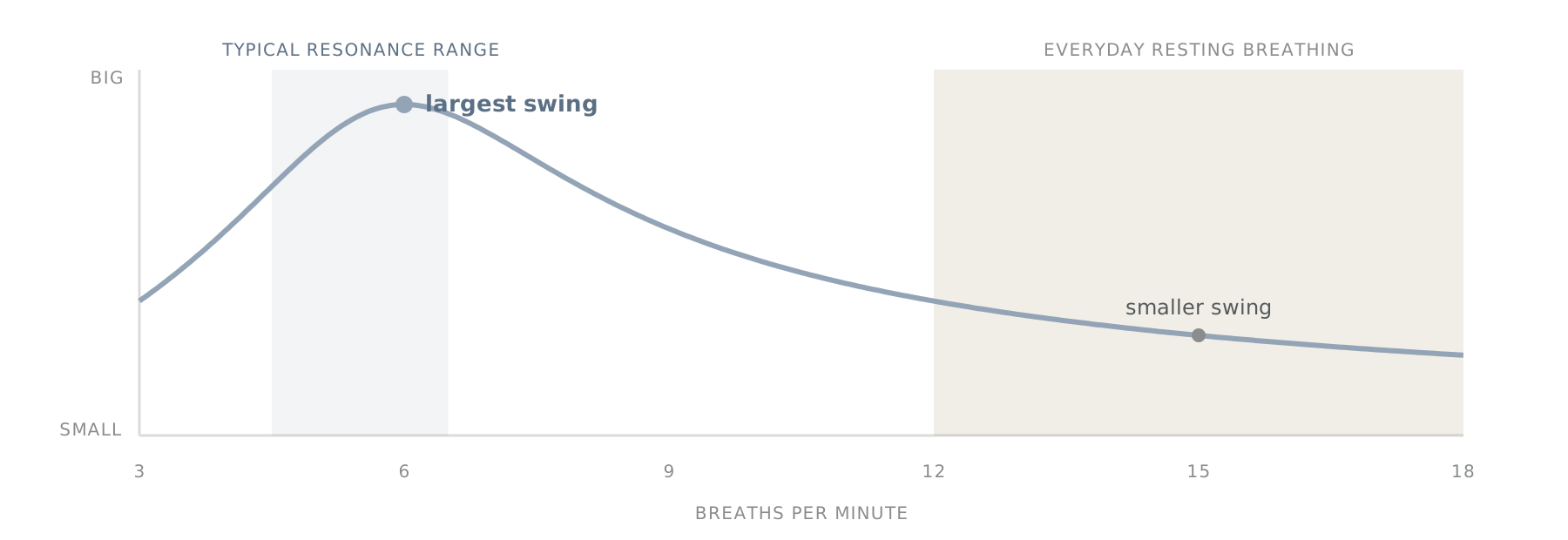
The swing peaks in a band, not at a point. Most adults' resonance pace falls somewhere around 4.5 to 6.5 breaths a minute, and it varies from person to person. An everyday resting pace produces a much smaller swing. Curve shape is illustrative.
Humans seem to have found this pace long before anyone measured it. In a study published in the BMJ in 2001, researchers asked volunteers to recite the rosary in Latin, or a yoga mantra. Both slowed breathing to almost exactly six breaths a minute, and heart-rate and blood-pressure rhythms fell into step with the breath. [14] Prayer beads and a lab metronome, it turns out, land on the same rhythm.
The honest caveat is in the section title. Six is an average, not a law. Individual resonance paces vary, usually between about 4.5 and 6.5 breaths a minute in adults. [10] Dr Lim is a case in point: "I'm convinced that my resonant breathing frequency is longer than six seconds," he says, and he feels the biggest shift at eight seconds in and eight out. He also noticed something that anyone who practises will recognise. "If I'm not emotionally grounded, I can't do that eight seconds... I can almost always easily get five or six, but eight is only accessible to me when I've done a bit of five and six to calm myself down."
He was equally clear that chasing your exact number misses the point. When Patrick raised the idea of finding each person's precise resonance pace, Dr Lim pushed back: "the enemy of good is perfect." Striving for the perfect breath, he argued, can shift you back toward the very activation you were trying to leave. For most people, five or six seconds in and five or six seconds out is all you need.
Try the resonance explorer at the bottom of this page: move the slider to see how your breathing pace changes the size of the heart-rate swing, then follow the pacer for Dr Lim's two-minute reset.
The two-minute reset
How much practice does it take to notice anything? Dr Lim's own habit is short. "In between patients in a busy clinic, I sometimes take a minute or two to just slow my breathing consciously, not think of writing up my notes or reading up about the next patient, but just focusing on my breath. And in just two minutes, I can notice a perceptible change in my state." At home, before bed and in the morning, he practises for around ten minutes, and adds what he calls the top-down half, which is the next section.
The research on longer-term practice is encouraging but needs a fair reading. A 2022 meta-analysis of 223 studies found that slow-paced breathing raised vagally-mediated HRV during practice, straight after a single session, and after multi-week programmes. [12] The during-practice effect is the most solid. The lasting effect on resting HRV is real in the pooled data but comes from studies of mixed quality. HRV biofeedback, where people train at their resonance pace while watching their heart-rate signal, shows small-to-moderate benefits across a wide range of outcomes in a 2020 meta-analysis of 58 trials, though those outcomes are too varied to support a claim about any single one. [13]
Fair to say. Breathing at about six breaths a minute reliably produces the largest heart-rate swing while you do it, and regular practice is associated with higher HRV over weeks. Many people find a couple of minutes enough to notice a shift in how they feel.
Overstated. That six is everyone's perfect number, or that "coherence" is a separate state of heart-brain harmony. Researchers who compared the two concluded that "coherence" largely describes the same resonance physiology under another name. [29]
The only part of the system you can drive by choice
Dr Lim made a simple point to Patrick that explains why breathing gets so much attention from cardiologists who think about the nervous system. Try to change your heart rate by thinking about it. "If I said to you, Patrick, increase your heart rate now by 10 points, you can't think it." The same goes for sweating, digestion or blood pressure. These run automatically.
Breathing is different. It runs automatically too, which is why you keep breathing while you sleep, but you can also take it over whenever you like. "I can't stop my heart, and I can't increase my heart rate by thought, but I can do with breath. So the breath control is one of the wonderful windows into the autonomic nervous system." Patrick's way of putting it for technical listeners: most body signals are read-only. Breath can be read and written.
Dr Lim frames what to do with that window as a triangle. Picture someone sitting cross-legged. At the top are thoughts, and above them behaviour. Lower down, around the chest, are feelings and emotions. At the base, throughout the body, is physiology: heart rate, gut, sweat, breathing.
Figure 3 · Top-down and bottom-up
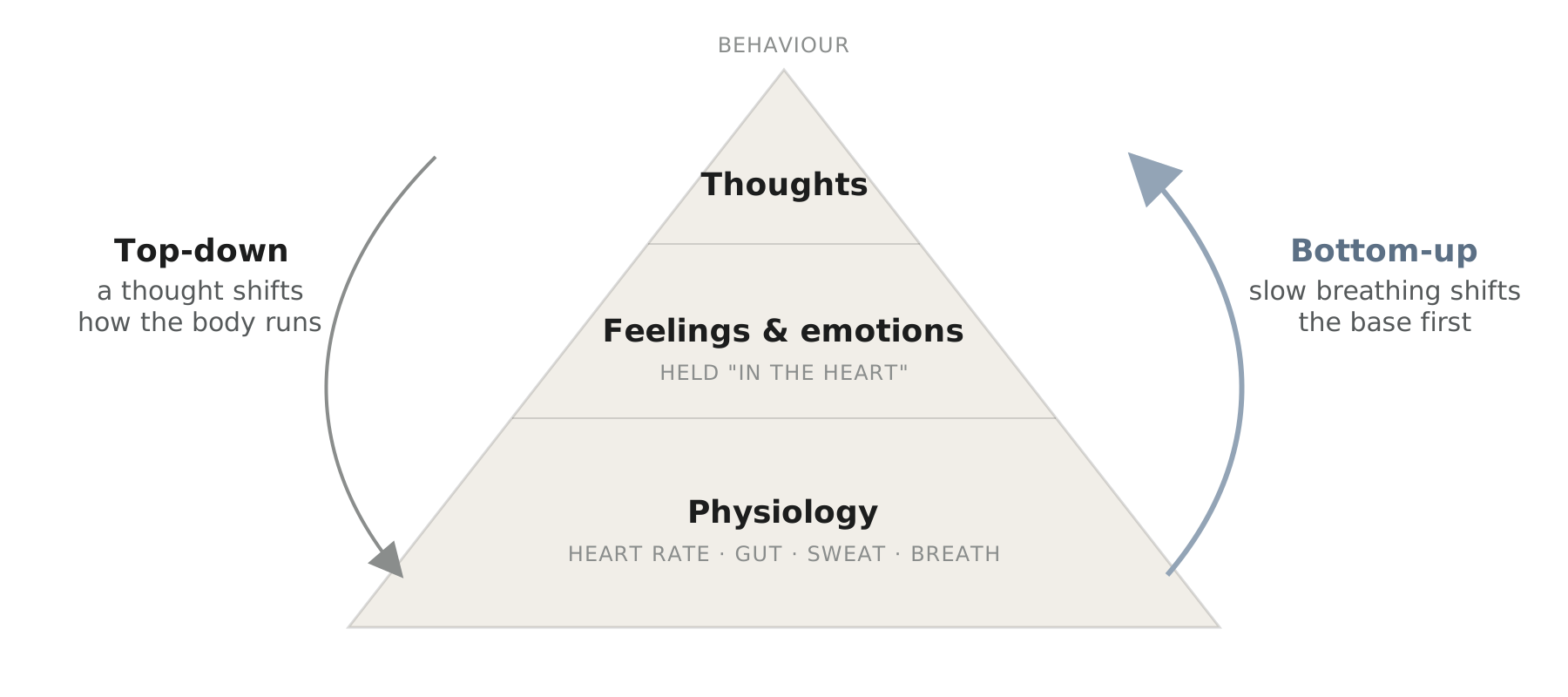
Dr Lim's triangle. We usually think of influence flowing down: a bad thought becomes a bad feeling becomes a knot in the stomach. Slow breathing works from the base up. He pairs the two, a slow breath first, then a calm or positive focus.
We usually assume influence runs down the triangle: a stressful thought becomes an anxious feeling becomes a racing heart. Dr Lim asks patients to consider the reverse. If your physiology is uncomfortable, a clear thought is hard to find. Ease the physiology and "your mind can sharpen, the behavior changes, the feelings lift, and the emotions shift." Breathing is the part of physiology you can reach on purpose, so it is where he starts, bottom-up. Then he adds the top-down half: a calm or positive focus once the breath has slowed. His observation, from his own practice and his patients, is that the combination shifts state faster than either alone. That is a clinician's experience rather than a trial result, and worth reading as such.
Not only for patients
None of this is reserved for people in a cardiology clinic. The pattern Dr Lim describes in patients with autonomic dysfunction, a system tilted toward activation with a higher resting heart rate, faster breathing and a sense of never quite switching off, is a more extreme version of something many busy, healthy people will recognise on a Tuesday afternoon.
Some of what tilts people that way is physical: chronic pain, illness, poor sleep. Some of it, he suggests, is how we relate to our own lives. He calls it the expectation gap: always chasing the next promotion, the next fitness goal, the next milestone, and never registering the ones already reached. His image is the rainbow you keep walking toward. "Take that spade and plant it where you are now, because you are at the pot of rainbow that you thought you'd never get to six months ago." It is not a breathing technique. It is a reminder that a two-minute slow-breathing practice works best as a pause, not as one more thing to optimise.
What the evidence supports, and what it doesn't
Breathing-for-the-heart content tends to present every claim with the same confidence. The research has a lot more texture than that. Here is the landscape sorted by how much weight each claim can carry.
Claim | What the research shows | Evidence |
|---|---|---|
Heart rate rises on the breath in, falls on the breath out (respiratory sinus arrhythmia) | Normal, well described, larger with slow deep breaths and in younger people. | Well-supported |
Slow breathing (~6/min) increases HRV while you do it (resonance breathing) | Consistent across hundreds of studies; the largest heart-rate swings occur near each person's resonance pace. | Well-supported |
Slow breathing raises baroreflex sensitivity (acute, in the lab) | Shown in healthy people and in people with hypertension and heart failure during the session. | Well-supported (short term) |
Regular practice raises resting HRV (over weeks) | Positive in pooled data, but studies vary widely in quality. | Moderate · mixed |
Slow breathing lowers blood pressure (device-guided or paced) | Modest average drops (around 5 mmHg systolic) in pooled trials; effect shrinks or disappears when manufacturer-linked trials are removed. | Moderate · mixed |
Breathing-muscle strength training lowers blood pressure (IMST, 30 resisted breaths/day) | About 9 mmHg systolic in small trials, mostly from one lab; not a large independent trial yet. | Promising · small |
A longer exhale than inhale boosts HRV (e.g. 4 in, 6 out) | Inconsistent: some studies find more HRV, others no difference. Many people find it more relaxing either way. | Moderate · mixed |
Breathing or yoga reduces atrial fibrillation (AF episodes) | Small, early studies of yoga (movement, breathing and meditation together); breathing cannot be isolated. | Weak · caution |
"Heart coherence" beyond breathing, heart fields, heart intuition | The measurable part is resonance breathing. Claims beyond that are not supported. | Not supported |
Raising your HRV lowers your risk of heart disease | Low HRV is associated with higher risk; no trial shows that raising it changes outcomes. | Not shown |
How to read this. "Well-supported" means several controlled studies point the same way. "Moderate · mixed" means real but small or inconsistent. "Weak" and "not shown" mean you should not rely on it, however often you see it repeated.
Blood pressure: the fine print matters
Blood pressure is where breathing claims are loudest, so it deserves a careful look. A device that guides users into slow breathing has been cleared by the US Food and Drug Administration since 2002 as an adjunct for high blood pressure, and in 2013 an American Heart Association scientific statement judged device-guided breathing "reasonable to perform" as an add-on, based on 15-minute sessions three to four times a week. [16] So far, so good.
Then read further. A 2012 meta-analysis of eight trials of that device found an average drop of about 3 mmHg systolic, and when the trials sponsored by or involving the manufacturer were removed, there was no significant effect at all. [16] A broader 2019 meta-analysis of 17 trials of slow breathing at ten breaths a minute or fewer found drops of about 5.6 mmHg systolic and 3 mmHg diastolic, which its authors called modest. [16] In the UK, NICE reviewed relaxation therapies, including breathing, and does not recommend them routinely for hypertension. The fair summary: slow breathing is associated with modest blood-pressure reductions in some trials, results are mixed, and it is not a replacement for anything your doctor has prescribed.
A different technique has produced more striking early numbers. Inspiratory muscle strength training (IMST) is not slow breathing at all: you breathe in hard through a handheld device that resists the breath, about 30 breaths a day. In a small, well-designed 2021 trial of adults aged 50 to 79, six weeks of it lowered systolic blood pressure by about 9 mmHg, with a sham device showing no effect. [17] An independent 2023 meta-analysis of eight small trials points the same way. It is promising, and it is still early.
Where the line is. If you have high blood pressure or take blood-pressure medication, do not change or stop it because of anything you read about breathing. Talk to your doctor before starting resisted-breathing training, especially if you have a heart or lung condition.
When a breathing question is really a heart question
People search for breathing answers to heart worries all the time: palpitations, a racing heart, a skipped beat on a deep breath, chest tightness, feeling faint when they stand up. Some of those have a breathing component. All of them deserve care, because the same sensations can come from very different causes. This section explains the physiology so you can have a better conversation with your doctor. It is not a way to decide you don't need one.
Get medical help first. Call emergency services for chest pain or pressure, especially with breathlessness, sweating, nausea, or pain spreading to the arm, jaw or back; for fainting with injury, during exercise, or with chest pain or palpitations; or for sudden severe breathlessness. See your doctor promptly for palpitations that are frequent, sustained or come with dizziness; breathlessness that is new, worse on exertion or when lying flat; swollen ankles; or repeated fainting. Do not assume any of these is "just breathing" or "just anxiety".
Overbreathing and the racing heart
Breathing fast and deep for longer than your body needs lowers the carbon dioxide in your blood. That sounds harmless, but low CO2 narrows blood vessels in the brain and the heart and can bring on tingling, light-headedness, a racing heart and chest tightness. [22] It is one reason "take a deep breath" can backfire during anxiety: big gulping breaths can feed the very symptoms they are meant to calm, and slower, gentler breathing tends to help more. But this cuts both ways. Clinicians sometimes use deliberate hyperventilation as a test to provoke spasm in the coronary arteries of susceptible patients, precisely because it affects the heart's blood supply. Chest symptoms during overbreathing are not automatically harmless.
Standing up and POTS
For people with postural orthostatic tachycardia syndrome, standing up sends the heart rate climbing. Dr Lim, who sees many POTS patients, describes it as blood pressure falling "literally into the boots" on standing, with adrenaline and a faster heart rate rushing to compensate. For diagnosis, the rise is typically more than 30 beats a minute from lying or sitting to standing, with symptoms. POTS affects the gut, breathing and heart together, and he compares it to the parable of the blind men and the elephant: each specialist touches one part and describes a limited truth. Some people with POTS also start overbreathing when upright, which lowers CO2 and can worsen symptoms. [23] Breathing awareness may help some patients alongside their clinician's plan. POTS needs a proper diagnosis first.
Fainting
The most common kind of faint, vasovagal syncope, is the vagal response overshooting: heart rate and blood pressure drop suddenly and the brain briefly runs short of blood flow. Dr Lim has led a syncope service for years, and he is candid about how much remains unknown: "I've been doing this fainting business for a very long time... and I still don't understand what eventually makes people faint." In his clinic, the mainstays are identifying triggers (heat, alcohol, standing still for long periods, overexertion, the sight of blood), plus hydration, salt, compression and keeping cool, all agreed with a clinician. The best-tested physical technique is not a breathing one: tensing the muscles, crossing the legs or gripping the hands when warning signs start cut recurrences by about a third in a 2006 trial. [24]
Breath-holds, cold water and the manoeuvres clinicians teach
Holding your breath, especially with cold water on the face, slows the heart through the diving reflex. For a specific rhythm problem called supraventricular tachycardia (SVT), clinicians use related techniques to try to reset the rhythm. In a 2015 emergency-department trial, simply changing posture, straining for 15 seconds half-sitting and then lying flat with the legs raised, more than doubled the success of the standard strain manoeuvre, from 17% to 43%. [21] That is a striking result, and it belongs to people with a diagnosed SVT who have been taught what to do by their clinician. It is not a home remedy for a racing heart, and these techniques do not stop atrial fibrillation.
Atrial fibrillation
AF comes up constantly in breathing questions, and it was the subject of Dr Lim's PhD on how the nervous system can trigger heart rhythm disorders. Small early studies of yoga, which combines movement, breathing and meditation, have reported fewer symptomatic episodes and better quality of life in people with AF. [27] They are too small, and the ingredients too mixed, to say that breathing reduces AF. Some people also worry that deep breaths trigger episodes; that is a question for your cardiologist, who knows your pattern.
The breathing you can't supervise
The breathing that may matter most for your heart happens when you are not paying attention: overnight. Obstructive sleep apnea, where the airway repeatedly narrows or closes during sleep, is common and mostly undiagnosed. The American Heart Association estimates that around 34% of middle-aged men and 17% of middle-aged women meet the criteria, and that most clinically significant cases have never been diagnosed. [25] It is strongly associated with resistant high blood pressure and linked with atrial fibrillation, heart failure and stroke. In one large study, people with severe sleep-disordered breathing had about four times the odds of AF. [25]
Here is the honesty test. In the largest trial to date, treating moderate-to-severe apnea with CPAP in 2,717 people with existing heart disease did not reduce heart attacks or strokes over several years, although it did improve snoring, sleepiness, mood and quality of life. [26] Average use was only about three hours a night, which may be part of the story. The lesson carries across this whole guide: a strong association is not proof that fixing one factor reverses the risk.
Two practical points. Loud snoring, pauses in breathing that a partner notices, gasping awake or heavy daytime sleepiness are reasons to get assessed, and your doctor can arrange a sleep study. And mouth breathing is not the same thing as sleep apnea; mouth tape is not a treatment for it and can be risky if you have undiagnosed apnea.
Night is also where the breath-heart rhythm is easiest to read. The coupling between breathing and heartbeat strengthens markedly in deeper sleep, [3] and breathing rate itself is remarkably steady night to night within one person. Clinicians treat respiratory rate as a core vital sign because a sustained change in it often comes before other signs that something is wrong. [28] For you, the value is simpler: knowing your own baseline makes a change easier to notice.
Your heart data is missing half the sentence
If breathing rate changes your HRV number, and resonance depends on how you breathe, then heart data without breathing data is missing its context. A falling HRV reading could mean poor recovery. It could also mean you breathed differently last night. Without the breath, you cannot tell.
Most rings and watches estimate breathing indirectly from the pulse at the wrist or finger. It is a clever estimate, but it cannot see the breath itself: the pace, the pauses, the balance of inhale to exhale, the sighs. Rings and watches are read-only in the sense Patrick meant, recording what the heart does. Breath works in both directions, and it is the one signal you can also change on purpose.
That is the gap Alveos One is built for. It sits on the chest and measures breathing directly. In a University of Kent study led by Prof. John Dickinson (bioRxiv preprint, June 2026, 20 healthy adults), its respiratory rate was within 2 breaths per minute of laboratory references in 94.6% of measurements at rest. Its metric set pairs that breathing signal with RSA, the breath-heart rhythm this guide is about, along with your resting breathing-rate baseline and how it drifts. Only the respiratory-rate measurement has been externally validated so far, and we say so plainly. Alveos One is a wellness device: it does not diagnose anything, and your state is always inferred, never read directly. What it offers is a better window, and a gentle tap at the moments a slow breath might help.
Fair to say. Tracking your own resting breathing rate and your breath-heart rhythm over time, measured the same way, can help you notice when something has shifted and see whether slow-breathing practice changes your pattern.
Not fair to say. That a wearable, ours included, can detect heart disease, arrhythmias, sleep apnea or nerve damage from breathing data, or that a single night's number means anything on its own. Trends, not verdicts.
A short, honest practice
Everything above reduces to a few things worth doing. None of them needs equipment, and all of them can start today.
Feel it once. Do Dr Lim's pulse check from section 01. Feeling your heart follow your breath makes the rest of this guide concrete.
Take the two-minute reset. When you notice you are wound up, sit, drop your shoulders and breathe gently at about five or six seconds in and five or six seconds out for two minutes. Then notice how you feel. No need to count perfectly.
Add the top-down half when you have time. For a longer ten-minute practice, once the breath has slowed, bring your attention to something calm or something you are grateful for.
Read HRV like a diary, not a league table. Compare your own overnight numbers over weeks. Never compare yourself with someone else's.
Respect the edges. Stop if you feel dizzy or tingly. Don't change blood-pressure medication because of breathing practice. Get palpitations, chest pain, fainting and suspected sleep apnea properly assessed.
The one-screen version
A healthy heart is not a metronome. It speeds up slightly as you breathe in and slows as you breathe out, and that rhythm is a sign of a flexible, well-regulated system.
Breathing does not control your heart. It shapes the timing of the nervous signals reaching it, through a brainstem gate, a pressure reflex and lung stretch sensors.
HRV is a calculation, and your breathing rate can move it on its own. Compare your own numbers, measured the same way, never someone else's.
The vagus nerve is mostly a reporting line. "More vagal" is not always better; balance and flexibility are the goal.
Breathing near six breaths a minute lines up breath and blood-pressure rhythms and produces the largest heart-rate swing. Your own best pace is somewhere around 4.5 to 6.5, and good enough beats perfect.
Effects during practice are well-supported. Long-term effects on blood pressure are modest and mixed, and no trial shows that raising HRV lowers heart risk.
Palpitations, chest pain, fainting, POTS symptoms and suspected sleep apnea are medical questions first.
Questions people ask
Why does my heart rate go up when I breathe in?
Breathing in briefly holds back the vagal signals that slow the heart and changes pressure in the chest, so heart rate rises slightly; breathing out reverses it. This is called respiratory sinus arrhythmia. It is normal and usually larger in younger, fitter people.
Is sinus arrhythmia normal?
The breathing-linked kind (respiratory sinus arrhythmia) is normal and a sign of healthy regulation. If a report or device flags an irregular rhythm that is not tied to your breathing, or you have symptoms such as dizziness, fainting or chest pain, ask your doctor.
What is the best breathing rate for heart rate variability?
For most adults, around six breaths a minute (roughly five to six seconds in and five to six out) produces the largest heart-rate swing. Individual resonance paces vary, usually between about 4.5 and 6.5 breaths a minute.
Can deep breathing lower blood pressure?
Slow breathing has been associated with modest short-term reductions in some trials, around 5 mmHg systolic on average, but results are mixed and weaker in independent studies. It is not a substitute for medical care; never change medication without your doctor.
Does a long exhale slow your heart rate?
Heart rate naturally slows during each exhale. Whether making the exhale longer than the inhale adds extra benefit is inconsistent across studies, but many people find it more relaxing, and slowing your overall pace matters more.
Can breathing exercises help heart palpitations?
Slow, gentle breathing can help when palpitations come with anxiety or overbreathing, while fast deep breathing can make them worse. Palpitations that are frequent, sustained, or come with dizziness, fainting or chest pain need a medical assessment first.
Can breathing exercises help AFib?
Small early studies of yoga, which includes breathing, reported fewer symptoms and better quality of life, but there is no good evidence that breathing alone reduces atrial fibrillation. Manage AF with your cardiologist.
Is sleep apnea bad for your heart?
Obstructive sleep apnea is strongly associated with high blood pressure, atrial fibrillation, heart failure and stroke. Loud snoring, witnessed pauses in breathing or heavy daytime sleepiness are reasons to ask your doctor about a sleep study.
Sources & further reading
Hirsch, J. A., & Bishop, B. (1981). "Respiratory sinus arrhythmia in humans: how breathing pattern modulates heart rate." American Journal of Physiology, 241(4), H620–H629.
Eckberg, D. L. (2003). "The human respiratory gate." Journal of Physiology, 548(2), 339–352.
Bartsch, R. P., et al. (2012). "Phase transitions in physiologic coupling." PNAS.
Hayano, J., et al. (1996). "Respiratory sinus arrhythmia: a phenomenon improving pulmonary gas exchange and circulatory efficiency." Circulation, 94(4), 842–847; and Ben-Tal, A., Shamailov, S. S., & Paton, J. F. R. (2012). modelling study in the Journal of Physiology.
Ewing, D. J., et al. (1985). "The value of cardiovascular autonomic function tests: 10 years experience in diabetes." Diabetes Care, 8(5), 491–498; and Spallone, V., et al. (2011). Toronto Consensus on cardiovascular autonomic neuropathy. Diabetes/Metabolism Research and Reviews.
Task Force of the ESC and NASPE (1996). "Heart rate variability: standards of measurement, physiological interpretation and clinical use." Circulation, 93(5), 1043–1065.
Quintana, D. S., & Heathers, J. A. J. (2014). "Considerations in the assessment of heart rate variability in biobehavioral research." Frontiers in Psychology, 5, 805.
Grossman, P., & Taylor, E. W. (2007). "Toward understanding respiratory sinus arrhythmia: relations to cardiac vagal tone, evolution and biobehavioral functions." Biological Psychology, 74(2), 263–285.
Tsuji, H., et al. (1994). "Reduced heart rate variability and mortality risk in an elderly cohort: the Framingham Heart Study." Circulation, 90(2), 878–883; and Hillebrand, S., et al. (2013). Europace, 15(5), 742–749.
Vaschillo, E., Lehrer, P., Rishe, N., & Konstantinov, M. (2002). "Heart rate variability biofeedback as a method for assessing baroreflex function." Applied Psychophysiology and Biofeedback, 27(1), 1–27; and Vaschillo, E. G., Vaschillo, B., & Lehrer, P. M. (2006). Applied Psychophysiology and Biofeedback.
Julien, C. (2006). "The enigma of Mayer waves: facts and models." Cardiovascular Research, 70(1), 12–21; and Lehrer, P. M., & Gevirtz, R. (2014). "Heart rate variability biofeedback: how and why does it work?" Frontiers in Psychology, 5, 756.
Laborde, S., et al. (2022). "Effects of voluntary slow breathing on heart rate and heart rate variability: a systematic review and a meta-analysis." Neuroscience & Biobehavioral Reviews, 138, 104711.
Lehrer, P., et al. (2020). "Heart rate variability biofeedback improves emotional and physical health and performance: a systematic review and meta analysis." Applied Psychophysiology and Biofeedback, 45(3), 109–129.
Bernardi, L., et al. (2001). "Effect of rosary prayer and yoga mantras on autonomic cardiovascular rhythms: comparative study." BMJ, 323, 1446–1449.
Bernardi, L., et al. (2002). "Slow breathing increases arterial baroreflex sensitivity in patients with chronic heart failure." Circulation, 105(2), 143–145; and Joseph, C. N., et al. (2005). "Slow breathing improves arterial baroreflex sensitivity and decreases blood pressure in essential hypertension." Hypertension, 46(4), 714–718.
Brook, R. D., et al. (2013). "Beyond medications and diet: alternative approaches to lowering blood pressure." AHA scientific statement, Hypertension, 61(6), 1360–1383; Mahtani, K. R., Nunan, D., & Heneghan, C. J. (2012). Device-guided breathing exercises in the control of human blood pressure: systematic review and meta-analysis. Journal of Hypertension, 30(5), 852–860; Chaddha, A., et al. (2019). Device and non-device-guided slow breathing to reduce blood pressure: a systematic review and meta-analysis. Complementary Therapies in Medicine; NICE (2019). Hypertension in adults, NG136, evidence review on relaxation therapies.
Craighead, D. H., et al. (2021). "Time-efficient inspiratory muscle strength training lowers blood pressure and improves endothelial function, NO bioavailability, and oxidative stress in midlife/older adults with above-normal blood pressure." Journal of the American Heart Association, 10(13), e020980; and Zheng, S., et al. (2023). Meta-analysis of inspiratory muscle training in hypertension. Frontiers in Cardiovascular Medicine.
Meehan, Z. M., & Shaffer, F. (2024). "Do longer exhalations increase heart rate variability during slow-paced breathing?" Applied Psychophysiology and Biofeedback; and Van Diest, I., et al. (2014). Applied Psychophysiology and Biofeedback, 39(3–4), 171–180.
Shattock, M. J., & Tipton, M. J. (2012). "'Autonomic conflict': a different way to die during cold water immersion?" Journal of Physiology, 590(14), 3219–3230.
Coumel, P. (1978 onward), the description of vagally mediated atrial fibrillation, as summarised in later reviews of autonomic triggers of AF.
Appelboam, A., et al. (2015). "Postural modification to the standard Valsalva manoeuvre for emergency treatment of supraventricular tachycardias (REVERT): a randomised controlled trial." The Lancet, 386, 1747–1753.
Laffey, J. G., & Kavanagh, B. P. (2002). "Hypocapnia." New England Journal of Medicine, 347(1), 43–53.
Stewart, J. M., Medow, M. S., et al. (2006). Postural hyperventilation and hypocapnia in a subset of patients with postural tachycardia syndrome. American Journal of Physiology: Heart and Circulatory Physiology.
van Dijk, N., et al. (2006). "Effectiveness of physical counterpressure maneuvers in preventing vasovagal syncope: the Physical Counterpressure Manoeuvres Trial (PC-Trial)." Journal of the American College of Cardiology, 48(8), 1652–1657.
Yeghiazarians, Y., et al. (2021). "Obstructive sleep apnea and cardiovascular disease." AHA scientific statement, Circulation, 144(3), e56–e67; and Mehra, R., et al. (2006). Sleep Heart Health Study. American Journal of Respiratory and Critical Care Medicine, 173(8), 910–916.
McEvoy, R. D., et al. (2016). "CPAP for prevention of cardiovascular events in obstructive sleep apnea" (SAVE). New England Journal of Medicine, 375(10), 919–931.
Lakkireddy, D., et al. (2013). "Effect of yoga on arrhythmia burden, anxiety, depression, and quality of life in paroxysmal atrial fibrillation: the YOGA My Heart Study." Journal of the American College of Cardiology, 61(11), 1177–1182; and Wahlström, M., et al. (2017). European Journal of Cardiovascular Nursing.
Cretikos, M. A., et al. (2008). "Respiratory rate: the neglected vital sign." Medical Journal of Australia, 188(11), 657–659; and Royal College of Physicians (2017), National Early Warning Score (NEWS) 2.
Sevoz-Couche, C., & Laborde, S. (2022). "Heart rate variability and slow-paced breathing: when coherence meets resonance." Neuroscience & Biobehavioral Reviews.
University of Kent / alveos (2026). Respiratory rate validation of Alveos One against laboratory references, n=20 healthy adults, led by Prof. John Dickinson. bioRxiv preprint, June 2026 (not peer-reviewed).
Expert interview. Dr Boon Lim, consultant cardiologist and electrophysiologist, Imperial College Healthcare; clinical lead, Imperial Syncope Diagnostic Service; author of Keeping Your Heart Healthy. alveos Art & Science of Breathing, episode 17, "Heart Is Not a Metronome" (2026).
This guide is for education and general wellness. It is not medical advice, diagnosis or treatment, and Alveos One is a wellness device, not a medical one. Nothing here is intended to diagnose, treat, cure or prevent any condition. The resonance explorer is an illustrative model and a relaxation exercise, not a measurement or a medical test. The clinical views quoted are Dr Lim's own. If you have a heart condition, palpitations, chest pain, fainting, high blood pressure or concerns about your breathing, consult a qualified healthcare professional.
Interactive · The resonance explorer
Move the slider to change how many breaths you take per minute and watch the modelled heart-rate swing grow or shrink. Then press Breathe with it, rest two fingers on your wrist or neck, and follow the ring for two minutes.
Modelled heart-rate swing: ±12 bpm
Inside the typical resonance range (about 4.5 to 6.5 breaths a minute). Breath-driven and reflex-driven rhythms line up, so the swing is at its largest.