Best Wearables to Track Your Breathing in 2026

Short answer: Oura, Whoop, and Apple Watch all put a “respiratory rate” on your morning summary, and none of them has measured a single one of your breaths. All three watch your pulse, which speeds up a touch when you inhale and eases off when you exhale, and calculate a breathing rate backwards from that wobble. The result is a respectable nightly average, useful for spotting a cold before you feel it. It can’t tell your nose from your mouth, and it clocks off the moment you get out of bed. A second, stranger group of devices (Zansors, Tymewear, Hexoskin) senses breathing for real, but only while you’re clipped, strapped, or zipped into them for a workout or a study. Alveos One is the odd one out twice over: it listens to the breath itself, and it does so continuously, day and night, which is what it takes to answer questions like “am I mouth-breathing in my sleep” or “when does my breathing change during the day.”
If you already wear a recovery ring, train with a chest strap, or have simply typed “best wearable to track breathing” into a search box and been handed five identical listicles, this comparison is for you.
How we’re comparing these
“Tracks your breathing” hides two different promises, and most buying guides never separate them:
Respiratory rate. How many breaths per minute you take, usually averaged over a night or a workout.
Breathing pattern. How you breathe: nose or mouth, shallow or full, steady or ragged, and how that shifts between your commute, your inbox, and 3am.
The gap between them is the gap between knowing how many words someone said and knowing what they said. Most wearables below deliver the first number by inferring it from your heart rate. A few specialist devices measure breathing directly, but only inside a session. Keep the two promises separate as you read, because the whole comparison turns on which one a device actually keeps.
Oura Ring
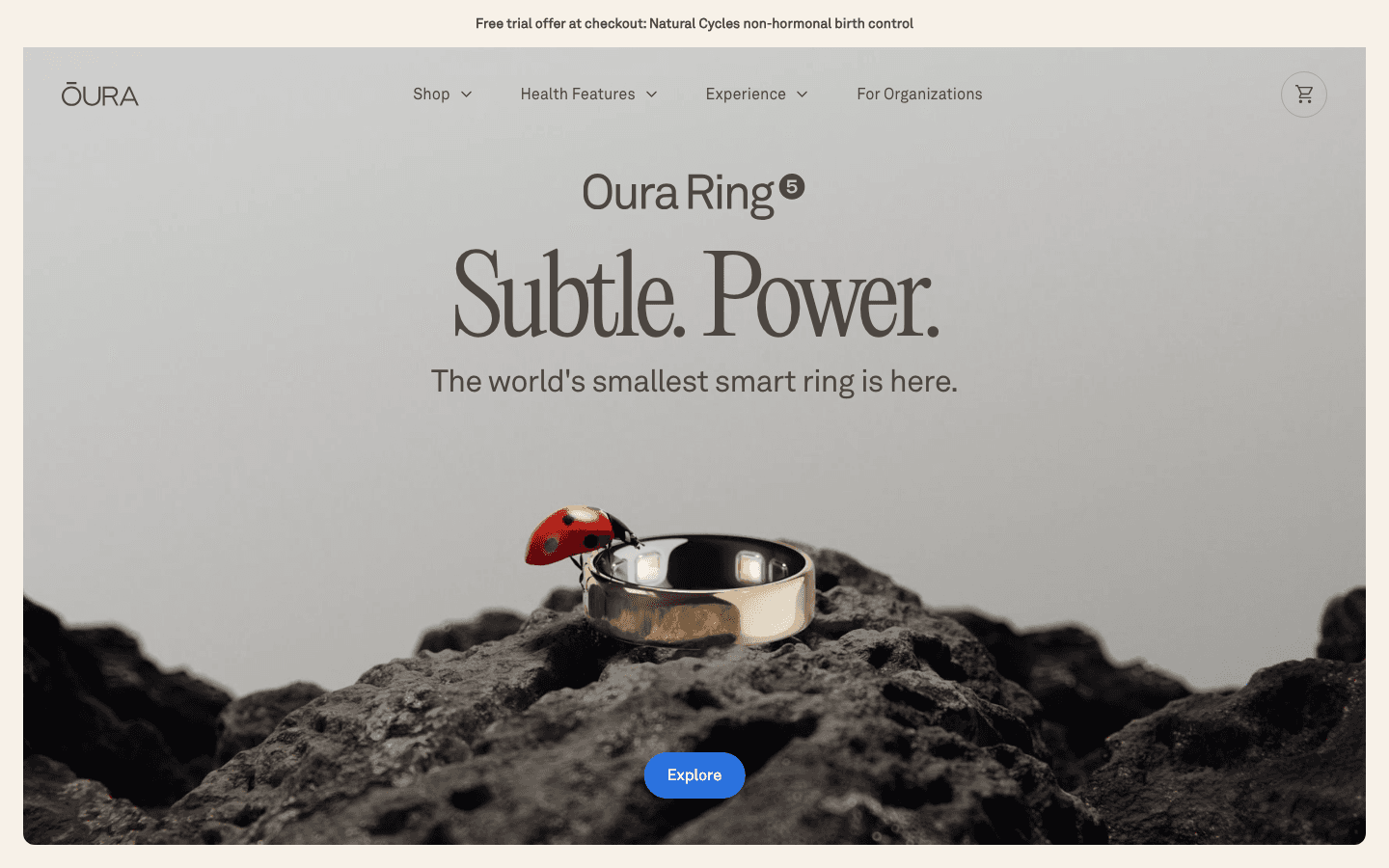
Oura gets respiratory rate from the same ring-based PPG sensor it uses for heart rate and HRV. The trick is respiratory sinus arrhythmia: your heart rate rises slightly on each inhale and falls on each exhale, and Oura counts that oscillation to back-calculate breaths per minute (Oura, “How Oura Measures Respiratory Rate”). It’s clever, it’s validated to within about one breath per minute of medical-grade reference tools (Oura, “How Accurate Is Oura’s Respiratory Rate?”), and it is also the closest the ring ever gets to your breath: secondhand, via your pulse.
Good for: overnight respiratory-rate trends, illness-onset flags, and HRV and sleep staging as part of a polished recovery picture.
Doesn’t do: daytime breathing, nasal-versus-oral detection, or any actual contact with the breath it reports on.
Whoop

Whoop runs the same respiratory-sinus-arrhythmia calculation from its own PPG sensor and reports your median respiratory rate during sleep inside its Health Monitor feature (Whoop Support, “Respiratory Rate and How to Track It”). Credit where due: Whoop is the only mainstream option here with third-party validation published in a peer-reviewed sleep journal, landing within about one breath per minute of polysomnography, the clinical gold standard (Whoop, “Why Your Respiratory Rate Matters”). Same method as Oura, better receipts.
Good for: the best-validated overnight respiratory rate of the mainstream three, bundled with strain and recovery scoring.
Doesn’t do: anything once you’re awake, or anything about the shape of a breath rather than its count. Health Monitor also sits behind Whoop’s higher-tier memberships, so check what your plan includes.
Apple Watch
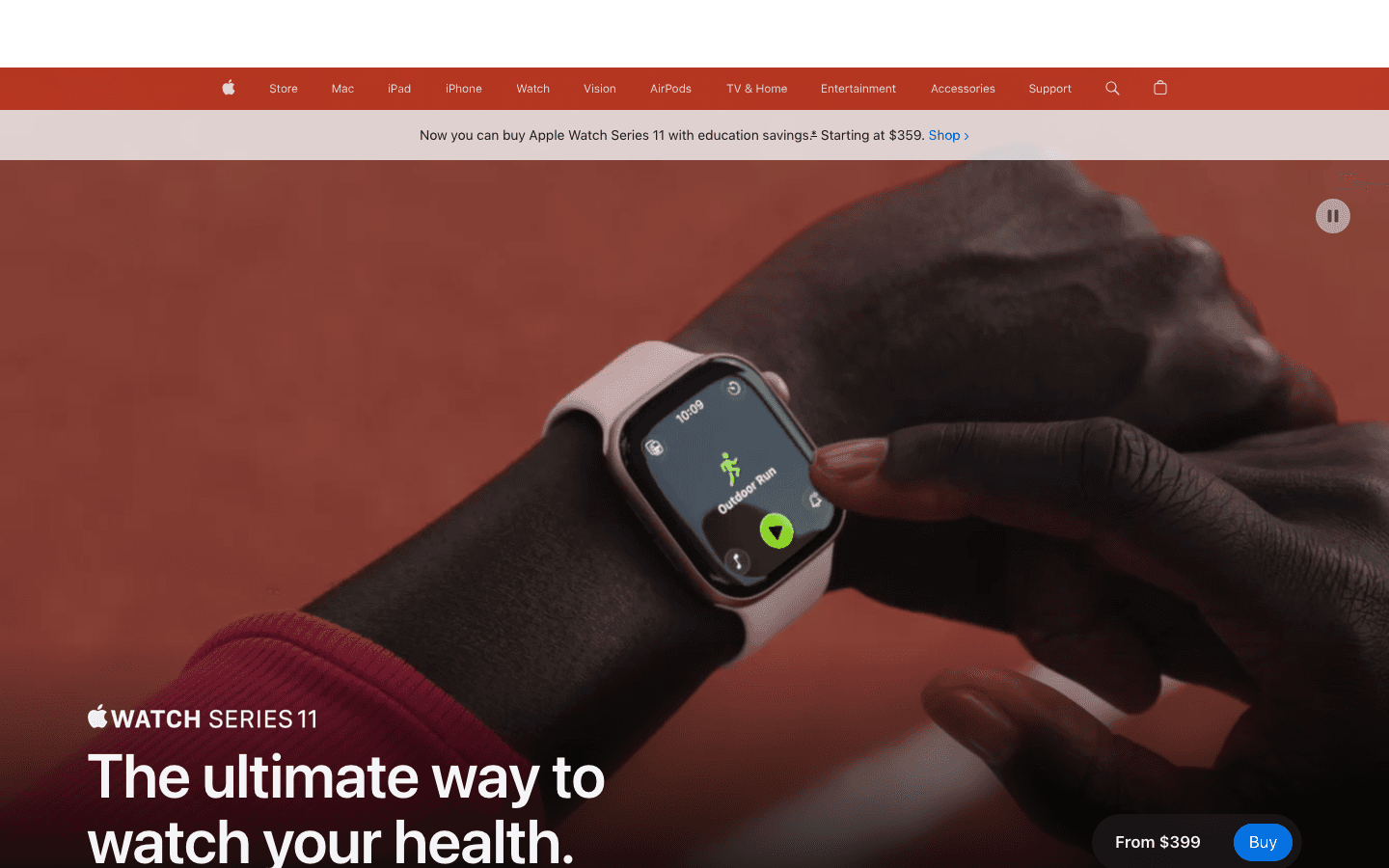
Apple Watch reports overnight respiratory rate, and on Series 9 or later, Ultra 2, and SE 3 it adds “Breathing Disturbances”: the accelerometer looks for irregular chest movement across the night and grades the pattern “Elevated” or “Not Elevated.” Stay elevated for roughly 30 days and you get a sleep apnea notification (Apple, “Sleep apnea notifications on your Apple Watch”). So the watch may eventually raise the subject of your sleep, about a month after your bed partner did. Apple is careful to call this a screening nudge, not a diagnosis: the feature “is not intended to diagnose, treat, or aid in the management of sleep apnea,” and the watch is not FDA-cleared to diagnose it.
Good for: a respiratory-rate trend inside a device half the people you know already wear, plus a slow-burn sleep apnea awareness flag.
Doesn’t do: anything in real time, and nothing on nasal versus oral breathing. It reads movement and heart rate, not air.
Fitbit, Garmin, and the rest
Fitbit, Garmin, and most other mainstream trackers use the same heart-rate-derived approach as Oura and Whoop, with the same strengths and the same blind spots: a solid overnight number, no daytime coverage, no idea which airway you used. If one of these is on your wrist right now, the comparison table below already describes it.
Zansors Respa
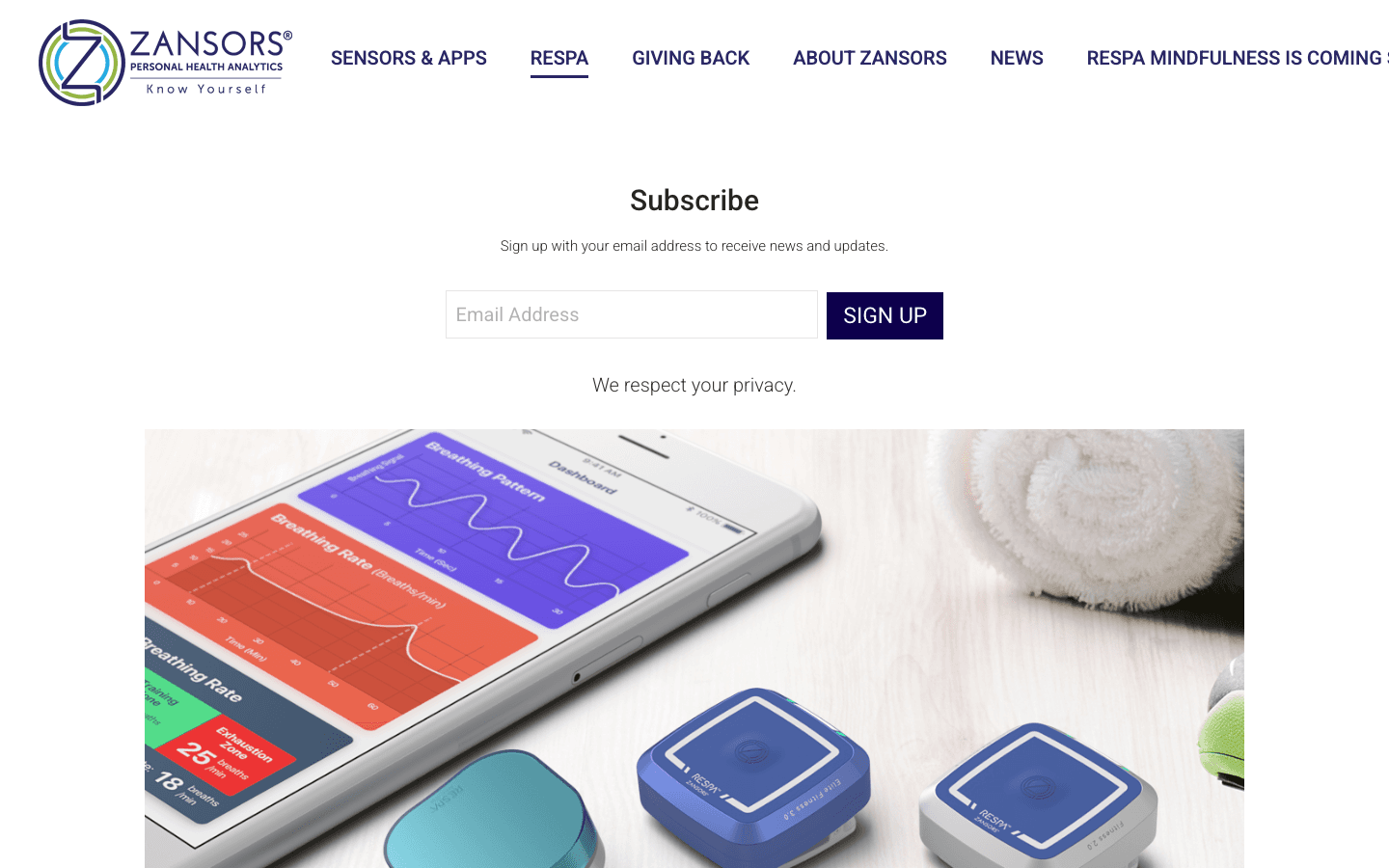
Now for the devices that measure breathing instead of deducing it. Respa is a small sensor that clips onto your clothing and points a self-tuning microphone at the sound of your breathing, through nose and mouth alike (New Atlas, “Respa keeps tabs on athletes’ breathing patterns”; Zansors, “RESPA: World’s 1st Breathing Sensor for Fitness”). During a workout, its algorithm sorts your breathing into rhythmic and non-rhythmic zones and buzzes you back on target when you drift, and it can also pick up coughing and wheezing. It has never had a general consumer release: as of August 2026, zansors.com lists Respa as “coming soon”, with no price and no way to buy one.
Good for: true acoustic sensing of nasal and oral airflow, with buzz-on-your-collar coaching for runners, cyclists, and rowers mid-session.
Doesn’t do: sleep, or the other 23 hours. Once you unclip it, your breathing goes back to being nobody’s business, including its own.
Tymewear VitalPro
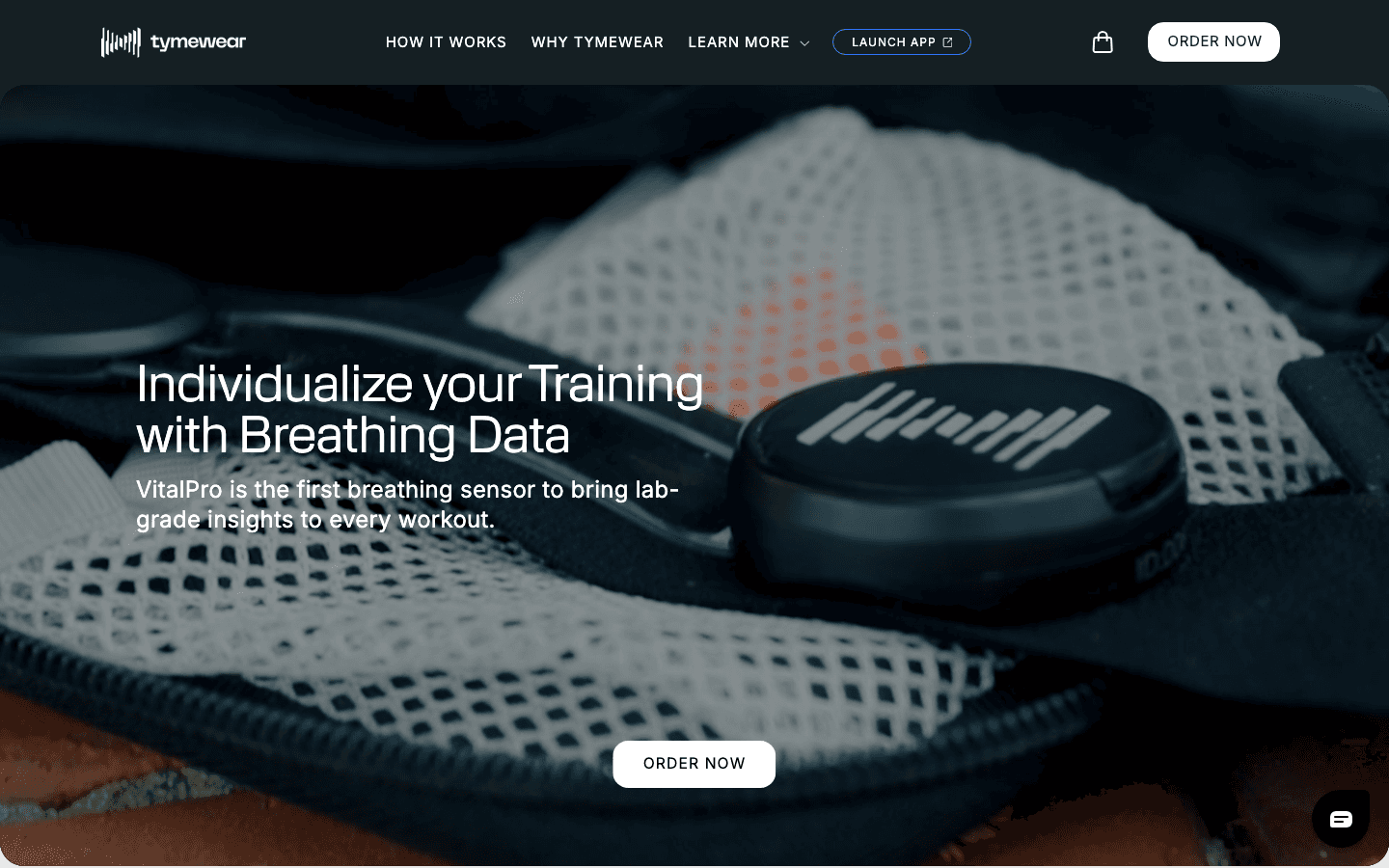
VitalPro is a chest strap built around a strain gauge that measures your rib cage expanding and contracting with each breath, the same principle lab ventilation tests use. BikeRadar’s verdict was that it’s “like having a £40,000 lab on your chest” (BikeRadar), which is the kind of sentence a marketing team frames and hangs in the lobby. It reports breathing rate, a tidal volume index, and minute ventilation, then uses those to estimate the ventilatory thresholds endurance athletes structure training around (Tymewear). Expect roughly $299 (£299) for the strap, with an optional training membership around $150 a year.
Good for: cyclists and endurance athletes who want direct, mechanical measurement of how much air they’re moving at threshold. Team-level tools at consumer prices.
Doesn’t do: nasal-versus-oral detection, sleep, or your workday. It measures how hard you breathe on a climb, not how you breathe through a Tuesday.
Hexoskin
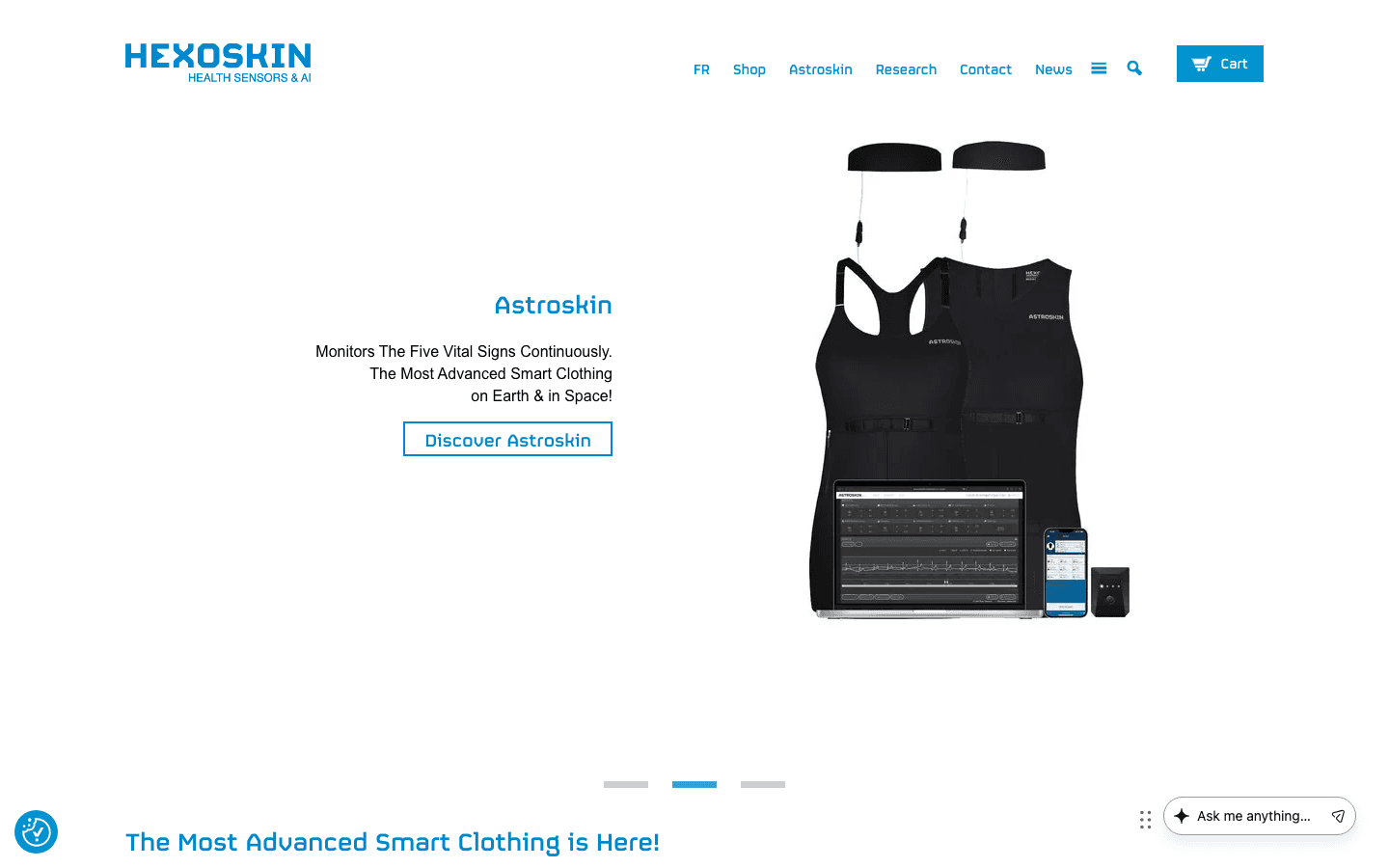
Hexoskin skips the strap and weaves the sensors into a compression shirt: textile respiratory inductance plethysmography (RIP) bands at chest and abdomen level track your rib cage and belly through every breath cycle (Hexoskin, “Placement of Hexoskin Sensors”). It reports breathing rate, minute ventilation, and VO2max alongside ECG, and its Medical System holds FDA 510(k) clearance for long-term ECG and respiratory monitoring (Cardiovascular Business). This is a shirt with a regulatory dossier, and it earned it: peer-reviewed lab validation is table stakes in Hexoskin’s world of research studies, rehab programs, and pro sport.
Good for: clinical- and research-grade continuous respiratory data. If a study team or a coaching staff is reading your numbers, this is the benchmark.
Doesn’t do: nasal-versus-oral detection, or blending into normal life. It’s a compression garment sized and priced for research and pro training (see hexoskin.com for current kits), and you will not forget you’re wearing it.
Vire Clip

Vire Clip takes a different road entirely: it’s worn at the waist and tracks body temperature, movement, and breathing around the clock, in service of circadian rhythm and metabolic insight (Vire Health). Breathing here is an instrument in the orchestra rather than the soloist; the product’s real question is when your body runs hot and cold across the day, and what that says about your energy and sleep timing. It’s currently preorder only in the EU and UK, with an estimated Q4 2026 ship date and a stated full refund if you cancel before shipping.
Good for: continuous day-and-night wear focused on circadian rhythm and core temperature trends, with breathing as supporting data.
Doesn’t do: nasal-versus-oral detection or real-time breathing feedback. It’s built to chart your rhythm, not to coach your breath.
What they all still miss
Sort these seven honestly and you get two camps and one shared blind spot:
The heart-rate camp (Oura, Whoop, Apple Watch, Fitbit, Garmin) never touches the breath. Every number is reverse-engineered from your pulse, and every number requires you to be asleep.
The direct-sensing camp (Zansors, Tymewear, Hexoskin) touches the breath, briefly. Respa and VitalPro live inside your workouts. Hexoskin can run for days in a study, but nobody wears a research compression shirt to a dinner party. Vire Clip is the only continuous one, and it reads breathing for rhythm trends rather than breath-by-breath feedback.
Not one of them can tell your nose from your mouth. Fourteen nasal breaths per minute and fourteen mouth breaths per minute produce the same number and very different mornings: mouth breathing during sleep is linked with dry mouth, snoring, and less restorative sleep (our guide to reducing mouth breathing at night covers why, and what to do about it).
Alveos One: measuring breathing, not inferring it
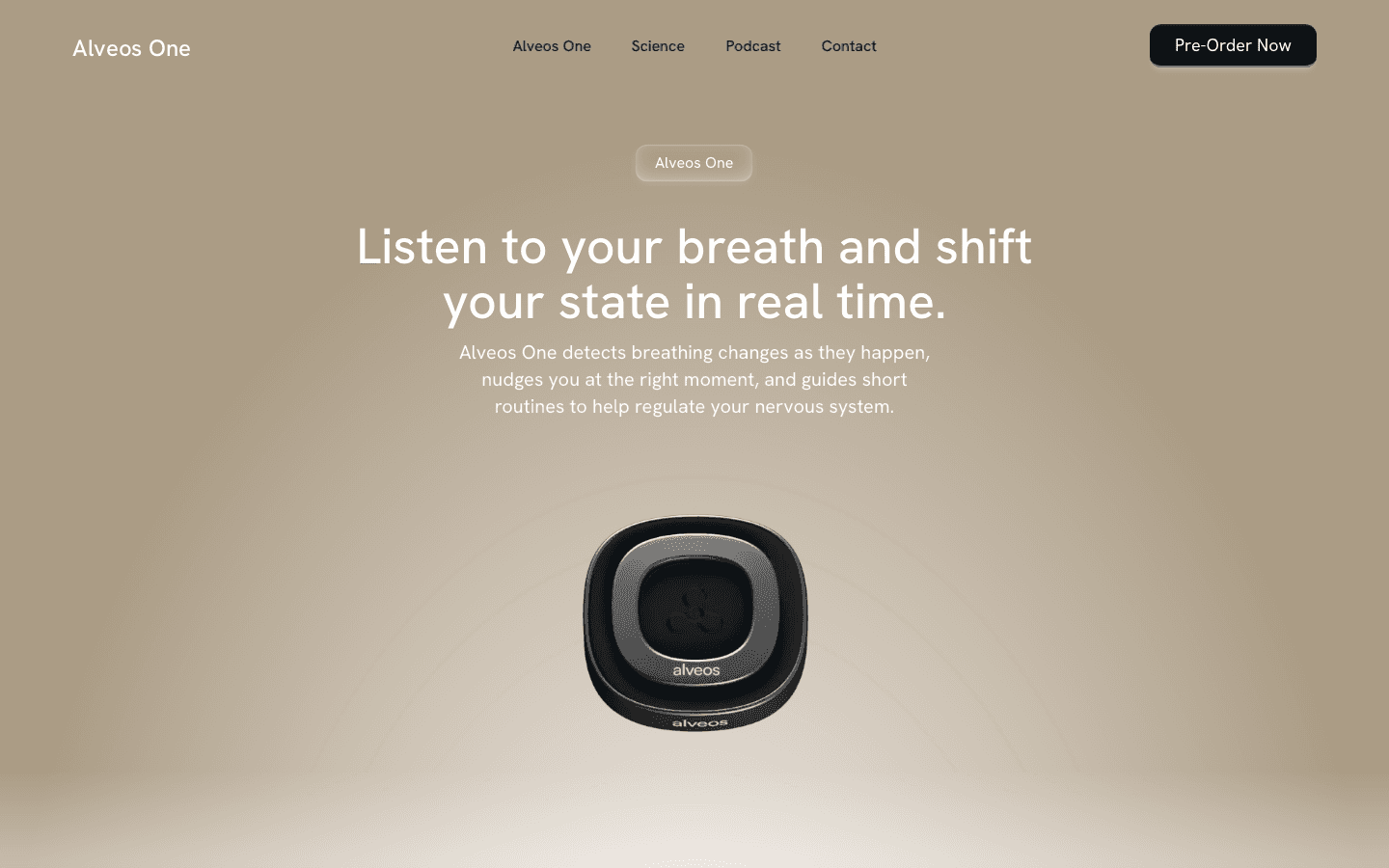
Alveos One uses acoustic and mechano sensing to pick up your airflow directly. No pulse arithmetic, no chest strap, no lab shirt: it senses the breath itself, which is why it can do the one thing nothing above can, and tell whether each breath went through your nose or your mouth. In an independent University of Kent study led by Prof. John Dickinson (who also joined us on our podcast), that direct-sensing approach put respiratory rate within 2 breaths per minute of reference equipment in 94.6% of measurements at rest, and the accuracy figures the different devices publish are not directly comparable. The full methodology, caveats included, is on our science page.
Because it senses rather than infers, Alveos One runs through your whole day and night, and it can nudge you toward nasal breathing in the moment rather than filing a report you read over coffee. Most wearables measure the effects of your breathing downstream, through your heart. A few measure the breathing itself, for as long as you’re strapped in. Alveos measures the breathing itself, all the time.
Comparison at a glance
| How it measures breathing | When it measures | Nasal vs. oral detection | Real-time feedback | Haptic breath alerts | Price (2026, approx.)* |
|---|---|---|---|---|---|---|
Oura Ring 4 | PPG, heart-rate-derived (RSA) | Sleep only | No | No | No | From $349 + $69.99/yr membership |
Whoop | PPG, heart-rate-derived (RSA) | Sleep only, Health Monitor tier | No | No | No | Membership from ~$199 to $399/yr, no separate hardware fee |
Apple Watch (Series 9+/Ultra 2/SE 3) | Accelerometer + heart rate | Sleep only; disturbance flag needs ~30 days | No | Notification only, delayed | No | From $399 (Series 10) / $799 (Ultra 2), no subscription |
Zansors Respa | Acoustic microphone, direct | Workout sessions only | No | Yes, real-time vibration during a session | No | Never generally released; “coming soon” per zansors.com (Aug 2026) |
Tymewear VitalPro | Strain gauge (chest RIP), direct | Workout sessions only | No | Yes, in-session ventilation data | No | ~$299 + optional ~$150/yr membership |
Hexoskin | Textile RIP bands, direct | Continuous within a monitored/research period | No | Data logged for review, not an in-the-moment nudge | No | Research/clinical and pro-training pricing; see hexoskin.com |
Vire Clip | Temperature + motion, waist-worn, direct | Continuous, day and night | No | Trend-based, not real-time | No | Preorder, 399 € / £289; shipping estimated Dec 2026 |
Alveos One | Direct acoustic + mechano sensing of airflow | Continuous, day and night | Yes | Yes, real-time nudge | Yes | See current pricing at alveoslabs.com |
Prices, tiers, and memberships change frequently. Confirm current figures directly with each brand before buying.
So which should you actually buy?
Full disclosure before the advice: we make one of the eight. Weight accordingly.
If you want an all-around recovery platform with sleep staging, HRV, and training strain, Oura, Whoop, and Apple Watch are mature, well-validated products, and nothing in this article is a reason to take one off. Whoop currently holds the strongest independent respiratory-rate validation of the three.
If you’re training for something specific and want real ventilation data mid-session, Tymewear is the pick for cyclists and endurance athletes chasing thresholds, and Zansors Respa plays a similar in-workout coaching role for runners and rowers. If you need clinical- or research-grade continuous data, Hexoskin has the FDA clearance and the peer-reviewed track record. If your question is about circadian rhythm rather than breath, Vire Clip was built for exactly that.
But if the question keeping you curious is “do I breathe through my mouth at night,” “how much of my day do I spend shallow-breathing,” or “when does my breathing shift when work gets loud,” none of those seven can answer it, because none of them senses breathing directly through an ordinary day and the night that follows, nose-versus-mouth included. That’s the gap Alveos One exists to close. Plenty of people wear it alongside a recovery ring or a training strap rather than instead of one; the devices are answering different questions, and your wrist, finger, chest, and collar are separate pieces of real estate anyway.
FAQ
Can Oura or Whoop tell if I mouth-breathe?
No. Both derive a single respiratory-rate number from heart-rate patterns, and that number looks identical whether the air went through your nose or your mouth. Neither has a signal that could make the distinction.
Does Apple Watch diagnose sleep apnea?
No. Its Breathing Disturbances feature flags a consistent pattern of irregular breathing over about a 30-day window, and Apple describes it as a notification, not a diagnosis. The watch is not FDA-cleared to diagnose sleep apnea.
Is Whoop’s respiratory rate accurate?
Whoop has the strongest independent validation of the mainstream wearables here: a peer-reviewed study found it within about one breath per minute of polysomnography. For a single overnight average, that’s a trustworthy trend number.
Do any wearables besides Alveos sense breathing directly, not just infer it?
Yes. Zansors Respa (acoustic microphone), Tymewear VitalPro (chest strain gauge), and Hexoskin (clinical-grade textile RIP bands) all measure breathing rather than back-calculating it from heart rate. All three are built around a workout or a monitored period rather than ordinary day-and-night life, and none of them distinguishes nasal from oral breathing.
Is Alveos One more accurate than Oura or Whoop?
It measures something different, so the comparison isn’t a leaderboard. Alveos senses airflow directly rather than inferring a rate from heart rate, and an independent University of Kent study found its respiratory rate within 2 breaths per minute of reference equipment in 94.6% of measurements at rest. Read it as a different measurement method answering a different question.
What’s the best wearable for tracking breathing overall?
It depends on which question you’re asking. Overnight respiratory-rate trend inside a recovery platform: Oura or Whoop. In-workout ventilation coaching: Tymewear or Zansors. Clinical-grade continuous data: Hexoskin. Circadian rhythm: Vire Clip. Continuous, real-time tracking of how you actually breathe, nose versus mouth, day and night: that’s the job Alveos One was built for.
Sources
Oura, “How Oura Measures Respiratory Rate From Your Finger”: ouraring.com/blog/respiratory-rate
Oura, “How Accurate Is Oura’s Respiratory Rate?”: ouraring.com/blog/how-accurate-is-ouras-respiratory-rate
Whoop Support, “Respiratory Rate and How to Track It”: support.whoop.com
Whoop, “Why Your Respiratory Rate Matters, And How WHOOP Helps You Understand It”: whoop.com/thelocker
Apple Support, “Sleep apnea notifications on your Apple Watch”: support.apple.com
New Atlas, “Respa keeps tabs on athletes’ breathing patterns”: newatlas.com
Zansors, “RESPA: World’s 1st Breathing Sensor for Fitness”: zansors.com/respa
BikeRadar, “This breathing sensor is like having a £40,000 lab on your chest”: bikeradar.com
Tymewear: tymewear.com
Hexoskin, “Placement of Hexoskin Sensors”: support.hexoskin.com
Cardiovascular Business, “FDA clears new ‘smart shirt’ for real-time cardiopulmonary monitoring”: cardiovascularbusiness.com
Vire Health: virehealth.com
Alveos science page (University of Kent validation study, respiratory rate within 2 breaths/min of reference in 94.6% of measurements at rest): alveoslabs.com/science

Stop guessing how you breathe
$99 today · fully refundable · first batch ships November 2026